The End of a United Kingdom?

Collapse
X
 
  • Filter
  • Time
  • Show
Clear All
new posts
  • Voltron
    Banned
    • Jan 2011
    • 1362

    #31
    Originally posted by fyrOM View Post
    Voltron, I agree with you that just because a peoples' neighbors have not let them rule themselves does not mean they are not indigenous to the land, even if the foreign rule has been one milllennia, as Onur says, or for that matter two millennia or however long - an occupation is an occupation and nothing more - but, reading your post, I cannot help wonder if the irony of your post is lost on you?
    OziMak, dont think I was oblivious when I said that.
    We have a couple differences though.

    1) Macedonians have a country - Kurds dont.
    2) Ask Kurds if they had to choose between naming their country New Kurdistan or nothing which would they prefer.

    What is ironic is that I was indirectly supporting your view regarding oppression from neighbors while Onur's standpoint was more in line with a hardliner and you couldnt even see past that.

    Comment

    • Onur
      Senior Member
      • Apr 2010
      • 2389

      #32
      Originally posted by fyrOM View Post
      Onur you are right that language is a great indicator of being a nation but I would not call it the defining factor as many Macedonians (and not just in the Aegean part) may not know to speak Macedonian well, let alone know how to read and write it, but can still feel very Macedonian.
      For my point of view, it is a defining factor because speaking your own language and then teaching it to your children would secure that you and your descendants ethnic identity will continue.

      Yes, someone might feel very Macedonian himself without even speaking Macedonian but this is also a great indicator that his children probably wont feel as Macedonian as himself. It`s because, maybe you wouldn't be able to teach your relatives to feel as a Macedonian or maybe they wouldn't prefer to learn at all but if you teach Macedonian language, then they would feel as a Macedonian regardless of how they think of themselves, because they will a strong bond with it `till the end of their lives.

      Learning a language is not that difficult for a person with an average IQ. Especially if it`s the language of his own, then it should be his duty to learn for himself and his children too, even as a 2nd language but ofc preferably as a mothertongue.

      I give a lot of importance to the language issue. I easily get disturbed if i hear a diaspora Turk speaking bad Turkish and i even despise the ones who cant speak at all. I have two friends who lived in abroad for more than 15 years but they still speak excellent Turkish and i also saw some who born and lived 30+ years abroad but with perfect Turkish again but i also saw some incompetent ones who only lived like 10 years abroad but speaks awful Turkish and their children cant even speak at all but hopefully they are not many.

      Living in an another country cannot be a reason for that but it can only be an excuse.
      Last edited by Onur; 05-10-2011, 01:04 PM.

      Comment

      • Soldier of Macedon
        Senior Member
        • Sep 2008
        • 13676

        #33

        Government website caught in row after 'burn Union flag' taunts
        Mar 25 2008 By Dave King

        BIGOTED rants and calls to "burn the Union flag" have appeared on the Scottish government's National Conversation website.

        The postings include anti-English slurs and attacks on the Royal family.

        Last night, the comments were slammed by the Nats' rivals. And Labour branded the constitutional conversation as a sham and waste of tax-payers' money.

        MSP Jackie Baillie claimed it was a desperate attempt to "cobble together superficial legitimacy for independence at taxpayers' expense".

        Baillie hit out at the bigots ahead of tomorrow's launch of the second phase of the conversation.

        Postings on the website include:

        "When ppl ask me why Scotland is not independent. I always say it will take a nation of millions to hold us back. That nation is England."

        "Why is the FirstMinister saying we will keep the (Royal) family when they usurped the crown?

        "If we do get to vote (on independence) and win and we keep the Queen, then Alex (Salmond) will have a revolution on his hands."

        "The English living in Scotland are mostly here to enjoy retirement on the richer pickings they had available to them so let's take control of our own country."

        "The day we become independent, I want the SNP to make flag burning legal for one day so we can burn all the Union Jacks."

        Baillie blasted the comments, saying: "There is no place for bigotry on a government website.

        "While open debate is central to our democracy, the government have to ensure they do not promote views that are unacceptable, especially when their website is paid for by the taxpayer.

        "It's not a national conversation, it's a national waste of taxpayers' money and an expensive way to have a conversation with yourself.

        "This is a propaganda exercise, nothing more, nothing less. It is a sham."

        But SNP business manager Bruce Crawford claimed: "What we are seeing now is panic and paranoia from the Labour Party as they crack under the pressure."

        The Nats want to attract business leaders and civic organisations to the debate when they launch its second phase tomorrow

        In the name of the blood and the sun, the dagger and the gun, Christ protect this soldier, a lion and a Macedonian.

        Comment

        • Soldier of Macedon
          Senior Member
          • Sep 2008
          • 13676

          #34
          Simon Jenkins: Only a tribalistic craving for central control explains the prime minister's urge to defend the UK against Scottish autonomy


          'Devo max' would make Scotland fiscally responsible – why does Cameron oppose it?Only a tribalistic craving for central control explains the prime minister's urge to defend the UK against Scottish autonomy
          Here we go again. Ireland gone. Scotland going. Next is Wales, and then where? Cornwall? The Isle of Wight? There is no knowing what the ineptitude of London politics may do to the British confederacy. The latest row over yes or no to Scottish "independence" is mere play-acting. The real issue is option three, "devo max". London hates it. Scotland craves it.

          For the past week constitutionalists have been dragged from their cobwebs to pore over laws and documents. This is pointless. When dissident provinces are set on separatism, the minutiae of referendum law will not stop them. Look at Bosnia, Slovakia, Kosovo, Macedonia – each different but starting from the same source. Britain went to war to break up the Yugoslav union. Many Britons yearn for the break-up of the European one. Why do they fight to sustain the United Kingdom as it manifestly crumbles?

          The answer is that English tribalism trumps hypocrisy. David Cameron has only conceded a binding referendum on Scottish independence because polls say it will be rejected. He opposes any delay because that makes such an outcome less certain. The nationalist, Alex Salmond, thinks the opposite – and for the same reason. Neither wants to risk defeat. Thank goodness elections at least are ordained by law.

          The longer London derides the aspirations of the non-English peoples of the British Isles, the stronger those aspirations will grow. Ireland departed the union in exasperation at London misgovernment in 1922. Only last year could the Irish tolerate a day visit by the Queen. Resistance to devolution cost James Callaghan his majority in 1979 and decimated Labour support in Wales. The imposition of a poll tax on the Scots in 1989 contributed to Margaret Thatcher's downfall and all but wiped out Scottish Toryism.

          Today, Cameron on Scotland is like George III on America, "astonished at the rebellious disposition which unhappily exists in some of my colonies".

          Most baffling of all is Cameron's horror of devo max, the one measure that might mitigate the UK's current centrifugalism. While the details remain to be discussed – first steps were set out in the 2009 Calman report – the concept is simple, that the Scots should raise and spend their own taxes and end their fiscal relationship (or most of it) with London. Monarchs, soldiers, flags, borders, passports are not at issue. Devolution would extend to paying for the infrastructure of the welfare state. Scottish – and eventually Welsh and Ulster – governments would be directly answerable for domestic policy to their electorates.

          If the Scots want this, and polls suggest they do, what does it matter that it would "cost them billions", as the British media constantly crows? Denmark survives. Norway survives. Meanwhile the Scots, Welsh and Ulster economies are more akin to that of Greece, with spending decisions detached from taxing ones to the point of irresponsible dependency. Scotland gobbles English money and nationalist politicians win votes by spending it on student grants, health prescriptions and wind turbines. Oil is not the issue, since a wasting asset should not go on current expenditure.

          There is no English advantage in letting this dependency continue, and it stands to the credit of Scots majority opinion that it wants it to end. Maximum devolution would repatriate fiscal responsibility to Adam Smith's home country. It would bring down to earth the spendthrift populism of Salmond's nationalists, probably lose them the next election and damage the cause of full independence. It would also demand a drop in the number of Scottish MPs at Westminster. All this is to the advantage of Cameron's Tories.

          The same goes for Wales. It is not Edinburgh (where Welsh was once spoken). Its decade-long experience of devolution has been politically fractious. Hospital and school closures are shambolic, economic development is dire and local democracy has been reduced to jobs for the boys. Welsh nationalists want independence, yet they also want more subsidy and disproportionately high representation at Westminter.


          Even so, a return to Welsh direct rule from Whitehall is inconceivable. There has been a steady rise in devolutionary enthusiasm, from the hesitancy of 1999 to two thirds support in a referendum last year. Rudeness about Celts may be a political parlour game in London, sometimes justified. But the idea that it makes Celts more inclined to bend the knee to Whitehall is absurd. They may not be Kurds or Kosovans, but they have much in common with Basques, Bretons and Catalans. Why not treat them as such?

          The United Kingdom was a creation not of tribal identity but of opportunism and convenience. Its dissolution began in the 1920s and has not ended. There is no historical necessity to it, any more than there was to the Third Reich or the Soviet Union, or now to the EU. Confederations have to be updated and nurtured to survive. Sometimes they outlive their purpose.

          Cameron should let Salmond have his referendum, and indeed champion devo max. It promotes fiscal responsibility. It would end the costly subvention to Scotland. Its political realism might even revive Tory fortunes in Scotland. Why Cameron should oppose it "to the last drop of my blood" is puzzling.

          There can be only one answer. Power and the craving for central control take on a logic of their own when politicians attain high office. In this case the craving is counterproductive. A century ago the British Isles were one nation. The government seems set on making it four.
          In the name of the blood and the sun, the dagger and the gun, Christ protect this soldier, a lion and a Macedonian.

          Comment

          • Soldier of Macedon
            Senior Member
            • Sep 2008
            • 13676

            #35
            Simon Jenkins: Only a tribalistic craving for central control explains the prime minister's urge to defend the UK against Scottish autonomy

            'Devo max' would make Scotland fiscally responsible – why does Cameron oppose it? Only a tribalistic craving for central control explains the prime minister's urge to defend the UK against Scottish autonomy

            Here we go again. Ireland gone. Scotland going. Next is Wales, and then where? Cornwall? The Isle of Wight? There is no knowing what the ineptitude of London politics may do to the British confederacy. The latest row over yes or no to Scottish "independence" is mere play-acting. The real issue is option three, "devo max". London hates it. Scotland craves it.

            For the past week constitutionalists have been dragged from their cobwebs to pore over laws and documents. This is pointless. When dissident provinces are set on separatism, the minutiae of referendum law will not stop them. Look at Bosnia, Slovakia, Kosovo, Macedonia – each different but starting from the same source. Britain went to war to break up the Yugoslav union. Many Britons yearn for the break-up of the European one. Why do they fight to sustain the United Kingdom as it manifestly crumbles?

            The answer is that English tribalism trumps hypocrisy. David Cameron has only conceded a binding referendum on Scottish independence because polls say it will be rejected. He opposes any delay because that makes such an outcome less certain. The nationalist, Alex Salmond, thinks the opposite – and for the same reason. Neither wants to risk defeat. Thank goodness elections at least are ordained by law.

            The longer London derides the aspirations of the non-English peoples of the British Isles, the stronger those aspirations will grow. Ireland departed the union in exasperation at London misgovernment in 1922. Only last year could the Irish tolerate a day visit by the Queen. Resistance to devolution cost James Callaghan his majority in 1979 and decimated Labour support in Wales. The imposition of a poll tax on the Scots in 1989 contributed to Margaret Thatcher's downfall and all but wiped out Scottish Toryism.

            Today, Cameron on Scotland is like George III on America, "astonished at the rebellious disposition which unhappily exists in some of my colonies".

            Most baffling of all is Cameron's horror of devo max, the one measure that might mitigate the UK's current centrifugalism. While the details remain to be discussed – first steps were set out in the 2009 Calman report – the concept is simple, that the Scots should raise and spend their own taxes and end their fiscal relationship (or most of it) with London. Monarchs, soldiers, flags, borders, passports are not at issue. Devolution would extend to paying for the infrastructure of the welfare state. Scottish – and eventually Welsh and Ulster – governments would be directly answerable for domestic policy to their electorates.

            If the Scots want this, and polls suggest they do, what does it matter that it would "cost them billions", as the British media constantly crows? Denmark survives. Norway survives. Meanwhile the Scots, Welsh and Ulster economies are more akin to that of Greece, with spending decisions detached from taxing ones to the point of irresponsible dependency. Scotland gobbles English money and nationalist politicians win votes by spending it on student grants, health prescriptions and wind turbines. Oil is not the issue, since a wasting asset should not go on current expenditure.

            There is no English advantage in letting this dependency continue, and it stands to the credit of Scots majority opinion that it wants it to end. Maximum devolution would repatriate fiscal responsibility to Adam Smith's home country. It would bring down to earth the spendthrift populism of Salmond's nationalists, probably lose them the next election and damage the cause of full independence. It would also demand a drop in the number of Scottish MPs at Westminster. All this is to the advantage of Cameron's Tories.

            The same goes for Wales. It is not Edinburgh (where Welsh was once spoken). Its decade-long experience of devolution has been politically fractious. Hospital and school closures are shambolic, economic development is dire and local democracy has been reduced to jobs for the boys. Welsh nationalists want independence, yet they also want more subsidy and disproportionately high representation at Westminter.


            Even so, a return to Welsh direct rule from Whitehall is inconceivable. There has been a steady rise in devolutionary enthusiasm, from the hesitancy of 1999 to two thirds support in a referendum last year. Rudeness about Celts may be a political parlour game in London, sometimes justified. But the idea that it makes Celts more inclined to bend the knee to Whitehall is absurd. They may not be Kurds or Kosovans, but they have much in common with Basques, Bretons and Catalans. Why not treat them as such?

            The United Kingdom was a creation not of tribal identity but of opportunism and convenience. Its dissolution began in the 1920s and has not ended. There is no historical necessity to it, any more than there was to the Third Reich or the Soviet Union, or now to the EU. Confederations have to be updated and nurtured to survive. Sometimes they outlive their purpose.

            Cameron should let Salmond have his referendum, and indeed champion devo max. It promotes fiscal responsibility. It would end the costly subvention to Scotland. Its political realism might even revive Tory fortunes in Scotland. Why Cameron should oppose it "to the last drop of my blood" is puzzling.

            There can be only one answer. Power and the craving for central control take on a logic of their own when politicians attain high office. In this case the craving is counterproductive. A century ago the British Isles were one nation. The government seems set on making it four.
            In the name of the blood and the sun, the dagger and the gun, Christ protect this soldier, a lion and a Macedonian.

            Comment

            • Brian
              Banned
              • Oct 2011
              • 1130

              #36
              It's starting to look like a year of change.

              Calls for referendum on independence


              London, January 13, 2012 (Reuters) - First Minister Alex Salmond of Scotland today called on British Prime Minister David Cameron talks about a referendum on Scottish independence, MIA reports from London.

              The press - conference in Dublin, where Salmond participate in the Irish-British summit, Scottish First Minister said that "despite differences in views on the referendum, both sides can discuss constructively, in Edinburgh or London, or anywhere else place ".

              Salmond's statement comes after last night adopted a resolution in the Scottish Parliament approving the position of Edinburgh, that the referendum is "Scottish matter" that can only be decided by the Scottish Government and Parliament Holirud. Salmond last night accused the British government that "terrorize" Scotland about the upcoming referendum, insisting London to be responsible for its implementation, but at the same capital he was conciliatory and sought to give the impression that the differences should be discussed in direct communication between the two governments and between him and Cameron.

              Scottish first minister in Dublin, met with Vice - Prime Minister of Great Britain, Nick Clegg. He later said the Scottish government has received a mandate from voters after the last election, but that between the two governments now have many topics to be discussed. Clegg flatly rejected blaming Salmond for allegedly "terrorizing" by the British government, insisting that what London offers is in the interest of Scots.

              Comment

              • Soldier of Macedon
                Senior Member
                • Sep 2008
                • 13676

                #37
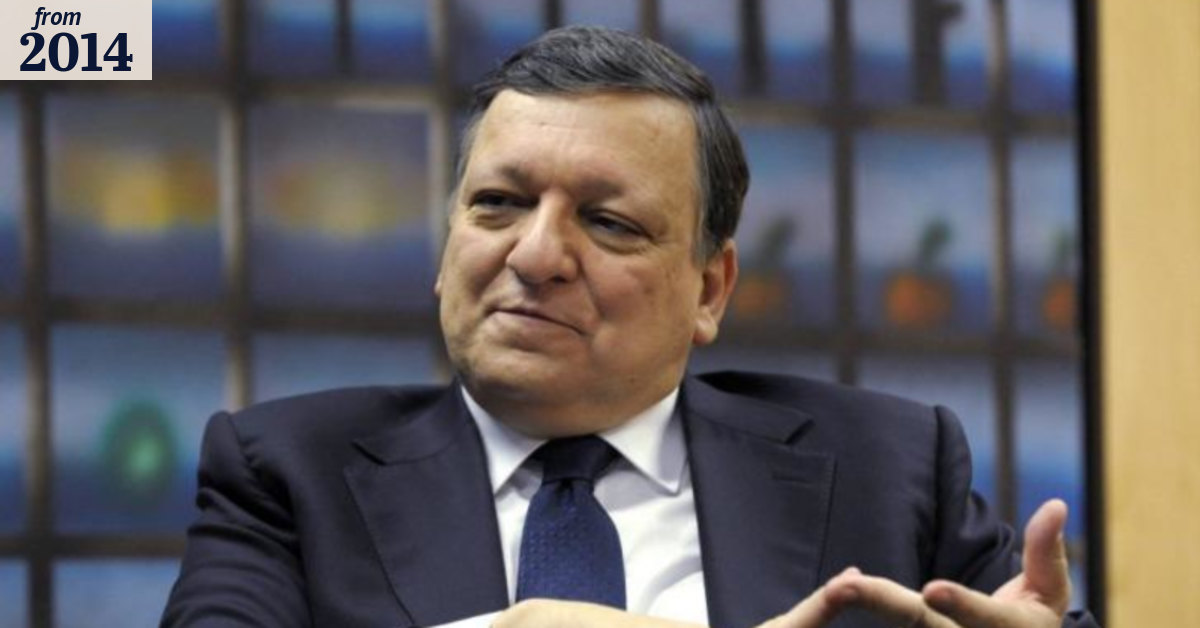
                Scotland independence: nearly impossible to join EU, says commission chief - February 17, 2014

                European Commission President Jose Manuel Barroso said states breaking away from existing EU countries would struggle to gain EU membership, further complicating Scottish nationalists' already uncertain plans for independence.

                London: European Commission president Jose Manuel Barroso said states breaking away from existing European Union countries would struggle to gain EU membership, further complicating Scottish nationalists' already uncertain plans for independence.

                Mr Barroso said on Sunday it would be nearly impossible for the EU to grant membership to such states, days after the British government said an independent Scotland would not be able to keep the pound as its currency. Scotland is due to hold a referendum on independence in September. Polls show around 29 per cent of voters in favour and 42 percent against, with 29 per cent undecided.

                Mr Barroso, interviewed on BBC television, declined to comment directly on whether an independent Scotland would be welcome to join the EU. But he said all EU states would need to back the membership of any new country that emerged from a current member state. "It would be extremely difficult to get approval of all the other member states ... I believe it's going to be extremely difficult, if not impossible," he said.

                The Scottish National Party, which is fronting the independence campaign, is banking on retaining both EU membership and the pound. John Swinney, an SNP member of Scotland's parliament, told the BBC that Mr Barroso's comments were "preposterous" and that no EU state had indicated it would veto Scottish membership. But secession is a sensitive subject for several other countries that have regions seeking to form their own states.

                Spain, which Mr Barroso said had been "opposing even the recognition of [former Serbian province] Kosovo", is for instance wary that a vote for Scottish independence might encourage separatists in its Catalonia region.

                Scotland's First Minister Alex Salmond also went on the offensive on Sunday against critics of the independence campaign. Writing in The Sunday Times newspaper, he accused the British government of bullying over the currency issue and said he had asked British Prime Minister David Cameron to rein in his campaign to keep Scotland's 307-year union with England intact.

                On Thursday Mr Cameron's finance minister, George Osborne, warned Scotland it would have to give up the pound if it voted to end the union, declaring the currency could not be divided up. Mr Barroso has previously said that any newly independent state would have to re-apply to join the EU. His comments are at odds with Scotland's blueprint for independence, published last year, which says that it hoped to agree a "smooth transition" to membership of the EU as an independent state.

                The paper said the Scottish government believed transition could be agreed without interrupting its EU membership in time for a potential independence declaration in March 2016. Mr Barroso and other EU commission officials are due to step down when their term ends at the end of October, but there is no evidence to suggest a new commission would take a different view of Scotland's membership rights.
                In the name of the blood and the sun, the dagger and the gun, Christ protect this soldier, a lion and a Macedonian.

                Comment

                • Soldier of Macedon
                  Senior Member
                  • Sep 2008
                  • 13676

                  #38

                  (Reuters) - Thousands of independence supporters took to the streets of Scotland's largest city, Glasgow, on Sunday as polls showed the rival camps running desperately close just five days before a referendum which could bring the break-up of the United Kingdom.

                  Separatist and unionist leaders worked across the country to woo undecided voters among the four million people Scots and Scotland residents who will vote on their future on Thursday.

                  Scottish National Party leader Alex Salmond, who has spearheaded the drive for independence, said he was confident the "Yes" campaign would win.

                  "We're not aiming to win by one vote. We're aiming to achieve a substantial majority if we can," he said on the BBC.

                  Alistair Darling, a former British finance minister and leader of the "Better Together" campaign, warned that if Scots vote to split from the United Kingdom, it would be an irreversible decision that would bring economic doom and gloom. With promises from British political leaders of greater powers for Scotland in the event of a "No" vote, Scots could have the best of both worlds, Darling said. And Queen Elizabeth, coming out of a Sunday morning church service near her Scottish residence Balmoral, told a well-wisher she hoped Scots would think very carefully about the future.

                  In Glasgow, the blue badges of the "Yes" to independence campaign dominated central Buchanan Street, with a convoy of cars driving through the downtown waving "Yes" banners and tooting horns. Buskers also sang in support of independence and a bagpipe-and-drum band drew a large crowd.

                  The Glasgow vote will be crucial to the result, given the city's size.

                  Thousands of people marched to the BBC headquarters, complaining that the state-run broadcaster was biased against the "Yes" campaign.

                  "We pay our license fees. We don't want them to favour us - we were just marching for an impartial state broadcaster," said Liz, a teacher.

                  Salmond has frequently accused the BBC - which could be carved up if Scotland votes for independence - of siding with the unionists. A BBC spokesperson said the corporation has been "rigorously impartial".

                  But the incident showed the high emotions and divisions stirred by the referendum, which could result in the end of the 307-year-old union with England and the break-up of the United Kingdom...........
                  Typical scare-mongering from the 'bigger' neighbour. The Scots have some strong elements among the British establishment working against them. I am for the independence of Scotland. But I wonder what sort of impact (if any) it will have on other countries in the same or similar position, such as Wales on one hand and Australia on the other.


                  How do you divorce after a 300-year union? It's complicated, and there is a deadline. If Scots vote yes to separation on Thursday, a clock starts ticking down to March 24, 2016 - the independence day declared by the Scottish government.

                  One thing both sides agree on - Queen Elizabeth II will continue to be the Scottish monarch after independence. Scotland and England shared a monarch for a century before they united politically in 1707, and the queen remains head of state in Canada, Australia and several other former British colonies. The queen will keep her Balmoral estate in Scotland, the royal family's traditional summer-vacation destination.
                  The above has me wondering a bit, and the only reason why I think it may make sense to some Scots is because somewhere in the lineage of Queen Elizabeth and her family there is Scottish ancestry.
                  In the name of the blood and the sun, the dagger and the gun, Christ protect this soldier, a lion and a Macedonian.

                  Comment

                  • vicsinad
                    Senior Member
                    • May 2011
                    • 2337

                    #39
                    Originally posted by Soldier of Macedon View Post
                    http://uk.reuters.com/article/2014/0...0H60M620140914

                    Typical scare-mongering from the 'bigger' neighbour. The Scots have some strong elements among the British establishment working against them. I am for the independence of Scotland. But I wonder what sort of impact (if any) it will have on other countries in the same or similar position, such as Wales on one hand and Australia on the other.

                    I know the people of Flemish Region, Catalonia, and Venice are watching this very closely. Spain and Italy will do all they can to ensure Catalonia and Venice don't hold a vote that amounts to secession.

                    Comment

                    • Philosopher
                      Senior Member
                      • Sep 2008
                      • 1003

                      #40
                      Originally posted by vicsinad View Post
                      I know the people of Flemish Region, Catalonia, and Venice are watching this very closely. Spain and Italy will do all they can to ensure Catalonia and Venice don't hold a vote that amounts to secession.
                      They sure are. There have already been massive protests in Spain. I think people are awakening to the lie that a "union" as in a "European Union" is good for the economy. Fracturing and splintering of regions makes much more sense.

                      I fully support this.

                      Comment

                      • George S.
                        Senior Member
                        • Aug 2009
                        • 10116

                        #41
                        the royal family will survive despite what has happened.There still will be respect for the monarchy.But the people have spoken that's what matters.Australia should become a republic no doubt about it.
                        "Ido not want an uprising of people that would leave me at the first failure, I want revolution with citizens able to bear all the temptations to a prolonged struggle, what, because of the fierce political conditions, will be our guide or cattle to the slaughterhouse"
                        GOTSE DELCEV

                        Comment

                        • lavce pelagonski
                          Senior Member
                          • Nov 2009
                          • 1993

                          #42
                          Australia will get my vote when they recognize Macedonia.
                          Стравот на Атина од овој Македонец одел до таму што го нарекле „Страшниот Чакаларов“ „гркоубиец“ и „крвожеден комитаџија“.

                          „Ако знам дека тука тече една капка грчка крв, јас сега би ја отсекол целата рака и би ја фрлил в море.“ Васил Чакаларов

                          Comment

                          • George S.
                            Senior Member
                            • Aug 2009
                            • 10116

                            #43
                            lavche as long as there are some 1 million greeks in melbourne we will never be recognized.The greeks will see to it that we are not recognizwd.
                            "Ido not want an uprising of people that would leave me at the first failure, I want revolution with citizens able to bear all the temptations to a prolonged struggle, what, because of the fierce political conditions, will be our guide or cattle to the slaughterhouse"
                            GOTSE DELCEV

                            Comment

                            • vicsinad
                              Senior Member
                              • May 2011
                              • 2337

                              #44
                              Although very unlikely any time soon considering their current absence of any power or significant sway, there is also this coming from Bavaria in Germany. While there are many small independence movements throughout Europe and worldwide that may seem laughable, I wonder how great of an effect a relative peaceful Scottish split (or possibly even a good attempt) would have on these movements.


                              (Reuters) - The German government on Monday ridiculed the suggestion that the rich southern region of Bavaria could try to break away if Scotland votes to split from the United Kingdom this week.

                              One local party, the Bavaria Party, has campaigned for decades for independence and has said that Scotland voting to leave Great Britain would lend weight to its own calls.

                              "I deem that to be an almost absurd thought," German Chancellor Angela Merkel's spokesman, Steffen Seibert, told reporters.

                              With opinion polls suggesting that Scotland's referendum remains too close to call, the prospects that the union may split after 307 years could whet appetites for self-rule across Europe - from Catalonia to Flanders.

                              In Germany, Bavaria and Hesse no longer want to subsidize poorer north and east German federal states and have challenged the country's fiscal equalization system in court.

                              In its heyday in the 1950s, the Bavaria Party gained almost 18 percent of the Bavarian vote but has not had a seat in the local parliament since 1966. It won 2.1 percent locally last year, and its demands are not on the ruling conservative Christian Social Union's (CSU) political agenda.

                              "We from the Bavaria Party wish our Scottish friends victory in the referendum," the party said on its website.

                              "A 'yes' would also have a positive effect on other regions in Europe. ...even in Bavaria it would bring real support and our media would no longer be able to simply ignore this topic or ridicule it," the website statement said.

                              In a rare German comment on Britain's internal affairs, Foreign Minister Frank-Walter Steinmeier said last week he would rather see Britain remain united.

                              Berlin seldom comments on Britain's internal debates but Merkel and other officials have often expressed concern about the possibility of Britain deciding to leave the European Union in a referendum on membership.

                              Comment

                              • Philosopher
                                Senior Member
                                • Sep 2008
                                • 1003

                                #45
                                With opinion polls suggesting that Scotland's referendum remains too close to call, the prospects that the union may split after 307 years could whet appetites for self-rule across Europe - from Catalonia to Flanders.
                                I of the opinion that the polling numbers are fake. I suspect there is a clear majority in favor of independence, but I have a feeling the British Crown will undermine it. Polling numbers are easy to manipulate, and I sense that this "too close to call" is intended to provide for a rationalization when the Scottish independence movement fails.

                                I hope I am wrong.

                                Comment

                                Working...
                                X