Originally posted by Soldier of Macedon
View Post
-
This is very informative SoM. I wonder how many more Bulgarians at that time had ich last names? -
Totally agree.Originally posted by Soldier of Macedon View Post
I am even dubious of any suffix ending whatsoever.Leave a comment:
-
The standardised surnames we see in the Balkans today were virtually non-existent prior to the 19th century, none appear to be common among the peasantry, instead the name of the father was generally used as a surname.Leave a comment:
-
Puli da ne fatish nekoj krasta .... was the typical mantra from my Baba before heading out on a Friday evening as a lad about town.
ha haLeave a comment:
-
Krastevich.... sounds like "Krasta" (the skin disease). A lot of old people still use the expression "Krasta da te (ne) jadi".Leave a comment:
-
In relation to the previous post.
http://en.wikipedia.org/wiki/Bulgari...my_of_Sciences
As Bulgaria was under Ottoman occupation, Bulgarian émigrés founded the Bulgarian Literary Society on 26 September 1869, in Brăila, the Kingdom of Romania. The first Statutes accepted were:
Board of Trustees
Nikolai Tsenov – President
Vasilaki Mihailidi
Petraki Simov
Kostaki Popovich
Stefan Beron
Acting members:
Marin Drinov (1838-1906) – Chairman
Vasil Drumev (1840-1901) – Member
Vasil D. Stoyanov (1839-1910) – Secretary
The following year, the Literary Society began issuing the Periodical Journal, its official publication, and in 1871 elected its first honorary member - Gavril Krastevich.Leave a comment:
-
It is pretty strange, and would probably have only been used within some limited Slavic-speaking circles. They are the first of the Slavic-speakers in the Balkans to gain independence (after the Montenegrins, who never truly lost it for any extended period).
I recall in the past there was some information concerning the Slavic-speakers of Thrace and Moesia, soon to be 'ethnic Bulgars', using 'ich' in their surnames during the early 19th century, influenced by free Serbia. Does anybody have that information on hand?Leave a comment:
-
So here is an interesting piece of info that I found that is quite the opposite of what was posted about the Serbs. Serbs = Peasants is what we already have in here. But this source states Serbs = Intellectuals???

Culture, Civilization, And Demarcation at the Northwest Borders of Greece by Laurie Kain Hart

and this link
So according to B. Recatas (whom I believe is a Frenchman) believes the term Serb = Intellectual. Considering that many Balkanites in the 19th century were iliterates this is a very strange socio-ethno label.Leave a comment:
-
Here is an example of the use of Vulgar meaning peasant predating the Volga Bulgars(Volgars) with about 800 years.Originally posted by makedonin View Post
There are many more connections like this to be made, remember the information is out thereLatin original:
Odi profanum vulgus et arceo.
which translates into English as:
I despise the common crowd and keep them away from me.
Quoted from Quintus Horatius Flaccus, he was a Roman poet and lived between the years BC 65-8. .
.
Leave a comment:
-
That "theory" needs some polishing. But for me, there is no doubt that Vulgar is the root word for Bulgar. There was "Vulgar Latin" and "Musika Vulgaris". Vulgar Latin was used by peasants, while Musika Vulgaris simply means "Folk Music". I don't have to mention that Balkan, or more to say "Slavic" feature is V<>B.Originally posted by Soldier of Macedon View Post
But if that is correct, what wikipedia states (I don't trust wiki) than, the "misfortune of faith" is not as I connected it.Leave a comment:
-
That could probably be an acceptable theory, but it would need to be studied a little further. Check the below thread, Danube Bulgars weren't even called Bulgars by many (if any?) early writers.
Leave a comment:
-
Of course there is Daskale.Originally posted by Daskalot View Post
The only misfortune with the Vulgarus i.e. Bulgarus is that it happened that there were Tartar people who had this name as their tribal name, thus the preexisting Vulgarus> peasant, commoner got mixed with the tribal Bulgar which most likely denote the origin place of this tribe, Volga river.
The fortune it has it's own waysLeave a comment:
-
While the suggestion is worth consideration, one of the issues I have is the presence of variant names located outside of the Balkans, such as the Sorbs in Germany and Poland.
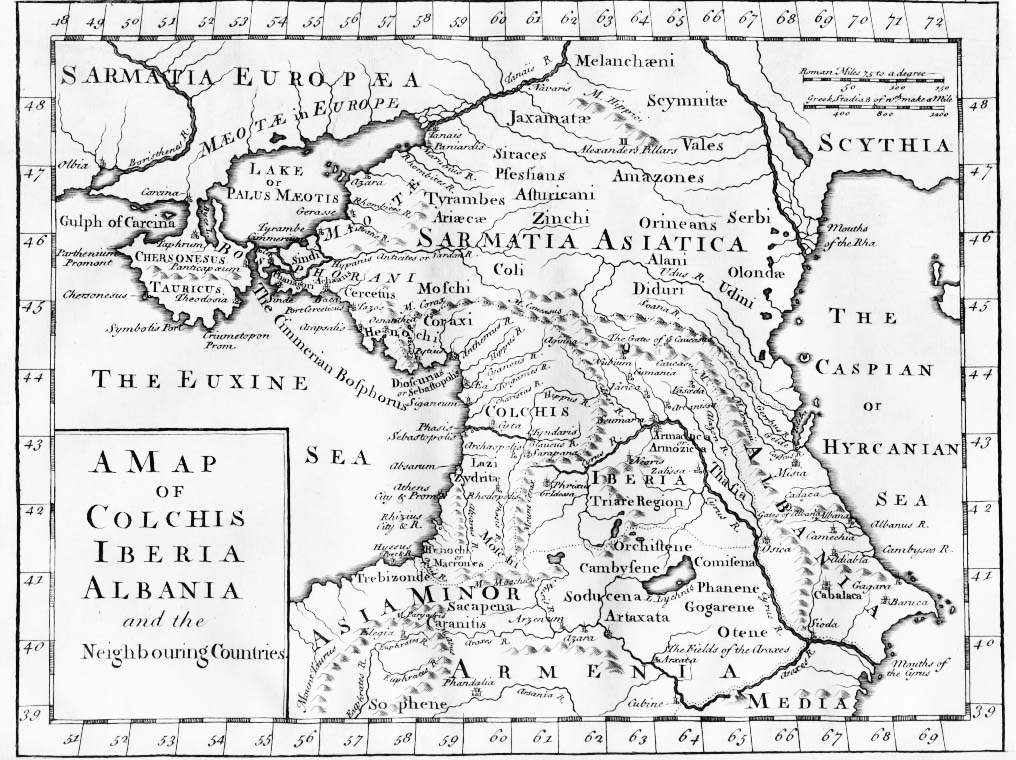
The Romans couldn't possibly have given the name to those people, as they (Sorbs) are said to have split from the (Balkan) Serbs prior to the latter's crossing south of the Danube. A likely origin for the name is Iranic, given the lacking Slavic etymology:
Origin of Serboi
The Serboi were probably Sarmatian (Iranian) tribe, who lived in Eastern Europe (Sarmatia Asiatica), to the north of the Caucasus. The earliest historical records about Serboi dates from the 1st century, in the works of the historian Tacitus (ca. 50 AD) and geographer Pliny (Plinius) (69-75 AD).
In the fourth century, Serboi, together with Huns and Alans, moved to Central Europe, and were found dwelling near the Elbe, in a region designated as White Serbia, in what is now Sachsen (eastern Germany) and western Poland. The Serboi, it is argued, intermarried with the indigenous Slavs of the region, adopted their language, and transferred their name to the Slavs. Since the white colour was designation for the west, name 'White Serbia' actually could mean 'Western Serbia'.
It is possible that the Serboi in Sarmatia were similar to other Sarmatian/Iranian peoples on the northern Caucasus, such as the Alans, and spoke an Indo-European Iranian language similar to present-day Ossetian. At some point in the history of the Serboi, this Old Sarmatian language stood side by side with the Slavic language in White Serbia (mentioned by the Byzantine emperor, Constantine Porphyrogenitus), and likely even in the first 300 years leading up to the formation of the Serb state in the Balkans in the 9th century.
Definetly an interesting topic that warrants a deeper look.Serbs and Croats would retain their sumptuous Iranian names. Bosnia was populated by an Illyrian tribe called Besoi. Montenegro would be called by Serbs as Crna Gora 'black mountain'.
The origin of the name Serb from an Indo-European root seems most probably. Serbian toponyms in their homeland in Caucasus are often remote to Slavic tongues, but close to Iranian.
Both names Serboi (Serb) and Hrvat (Croat) seem to have originated in ancient Iran. Even today, there is Pashtun tribe in Afghanistan named Sarbans. They could be most probably ancestors of the old Sarmatian Serbs.
Most probably, the origin of Serbs and Croats is Indo-European. Although they adopted the language of the Slavs and mixed with them, they preserved their original Iranian names. Franks, a Germanic tribe who had conquered Gaul also lost its ancient language against numerically superior native population.Leave a comment:
-
Here is an importan quote about what the meaning of Serb/Serv/Serf is, directly from the horses mouth so to say:
Source: "DE ADMINISTRANDO IMPERIO" by Constantine Porphyrogenitus, paragraph 32, written between the years AD 948-952.But when two brothers succeeded their father in the rule of Serbia, one of them, taking one half of the folk, claimed the protection of Heraclius, the emperor of the Romans, and the same emperor Heraclius recieved him and gave him a place in the province of Thessalonica to settle in, namely Serbia, which from that time has acquired this denomination. 'Serbs' in the tongue of the Romans is the word for 'slaves', whence the colloquial 'serbula' for menial shoes, and 'tzerboulianoi' for those who wear cheap, shoddy footgear. This name the Serbs acquired from their being slaves of the emperor of the Romans.
So the Latin word for SERVUS/SERVI which means SLAVE/SLAVES is the name given to the SERBS of today.
Simple isnt it?
Please do also consider this, if the Latin word SERVUS has everything to do with the now National and Ethnic name of the modern Serbs so why would there not be a connection with the Latin word Vulgarus and the modern name of the Bulgars?Leave a comment:
-
That's very true Pelister. Many of the South Slavic speakers did in fact refer to themselves as Illyrians and their language as Illyrian or as SoM wrote Illyrski.Leave a comment:


Leave a comment: